Best Clamshell Containers for Your Packaging Needs?
When it comes to packaging, the right choice can make all the difference. Clamshell containers are increasingly popular due to their versatility. These containers offer both functionality and visual appeal. They are used in various industries, from food to retail. Understanding their benefits is essential for making informed decisions.
Clamshell containers are designed for easy access and product visibility. Many are made from recyclable materials, aligning with sustainable practices. However, selecting the best clamshell container can be challenging. Not all containers provide the same level of durability or protection. It's crucial to consider your specific needs, whether it's for fresh produce, baked goods, or retail displays.
Despite their advantages, clamshell containers are not without flaws. Some designs may not stack efficiently, leading to storage issues. Others might be too rigid or fragile for certain products. Reflecting on these aspects can lead to better packaging choices in the long run. Ultimately, choosing the right clamshell container requires careful thought and a clear understanding of your packaging requirements.
Understanding Clamshell Containers: An Overview of Features and Benefits
Clamshell containers have gained prominence in various packaging applications due to their unique design and functionality. These containers feature a hinge that connects two halves, making them easy to open and close. They are widely used in the food industry, especially for fruits, vegetables, and baked goods. According to a recent market report, the global clamshell packaging market is expected to grow at a CAGR of 5.1% through 2027, indicating rising demand for effective packaging solutions.
The benefits of clamshell containers extend beyond convenience. They offer excellent product visibility, allowing consumers to see the items inside without opening the packaging. This transparency can enhance customer appeal and drive sales. Furthermore, they are often made from recyclable materials, aligning with the increasing consumer demand for sustainable packaging options.
However, one challenge lies in ensuring that not all clamshell designs are environmentally friendly. As some materials may not be widely accepted in recycling programs, brands must carefully consider their choices.
Moreover, while clamshell containers provide a protective barrier from contaminants, they can also be prone to damaging impacts if mishandled. A study highlights that nearly 15% of clamshell packaging shipments experience damage during transport. Companies need to address this issue to improve the integrity of their packaging solutions. Understanding both the strengths and limitations of clamshell containers is crucial for making informed packaging decisions.
Types of Clamshell Containers: Materials and Designs Explained
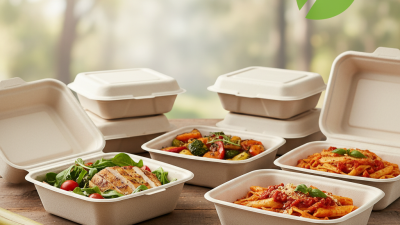
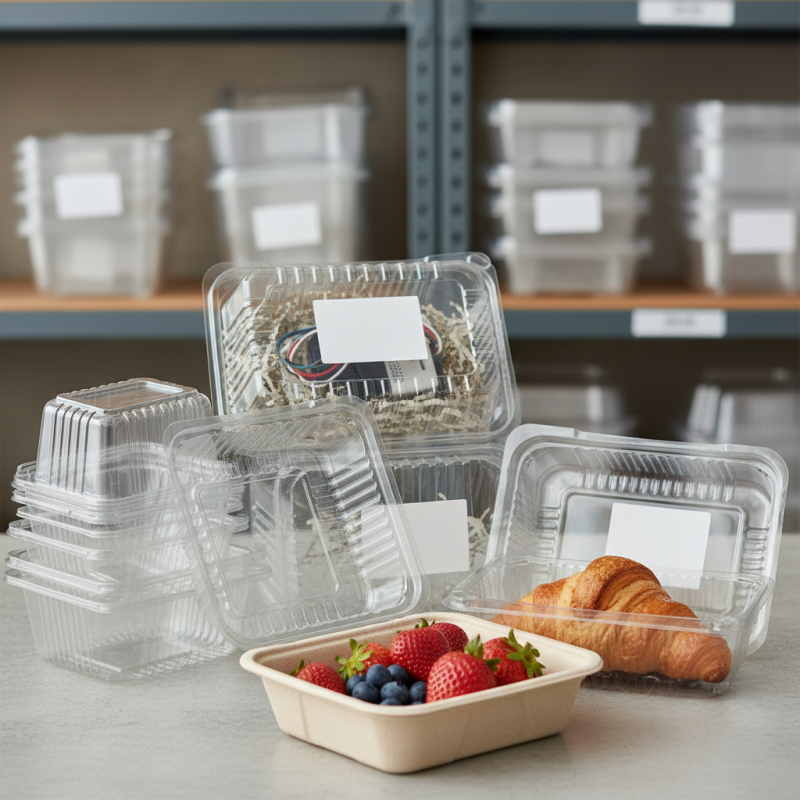
Clamshell containers come in various materials, each serving specific purposes. For instance, clear plastic options provide visibility, making them popular for food packaging. They allow customers to see the contents quickly, which enhances the shopping experience. These containers are often made from PET or PVC, which are both durable and lightweight.
Another option is biodegradable materials. Such clamshells appeal to eco-conscious consumers. Made from plant-based substances, they offer a sustainable alternative, though they may not always be as sturdy as plastic. The design also plays a crucial role. Some clamshells feature special compartments, which help keep products separated and organized. However, not every design offers optimal convenience. Users sometimes find traditional snap closures difficult to open, leading to frustration.
Exploring the right container for your needs can be a challenge. Understanding the nuances in materials and designs is essential. Approaching your packaging with an eye on sustainability and functionality can enhance your brand image. However, it is always wise to test several options to see what resonates with your audience. Clamshell containers may be versatile, but finding the perfect fit requires thoughtful consideration.
Factors to Consider When Choosing Clamshell Containers for Packaging
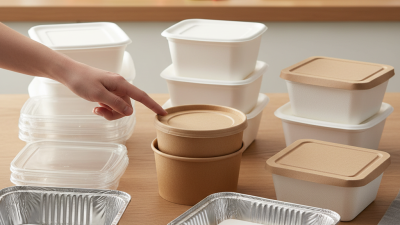
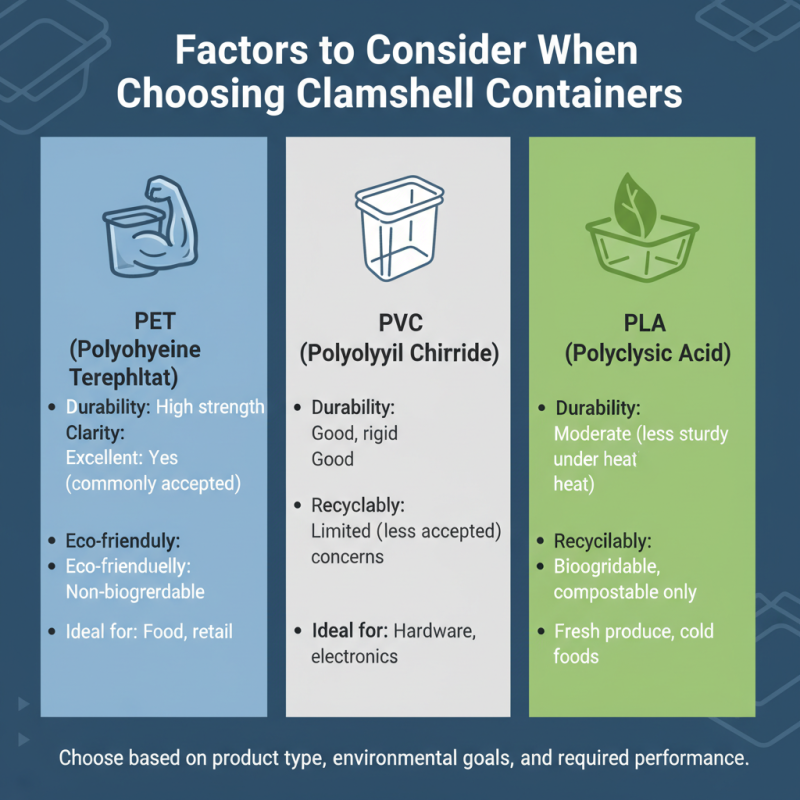
When selecting clamshell containers for packaging, multiple factors come into play. The material is crucial. Common choices include PET, PVC, and PLA. Each has different properties that impact durability, clarity, and recyclability. PET containers, for instance, are strong and clear, making them ideal for food products. However, they may not be biodegradable. On the other hand, PLA is eco-friendly but can be less sturdy under certain conditions.
Size and design are also pivotal. It's important to choose the right dimensions to reduce waste. Many clamshells come in various shapes, allowing customization for specific products. Consider how the design impact visibility too. A well-designed container can enhance product appeal.
Cost is another variable to evaluate. Budget constraints might limit your options. Often, cheaper containers compromise quality. This trade-off can affect customer perception. Ensure that your choice balances cost with effectiveness. Finally, confirming the supplier's reputation is wise. Researching their track record can prevent future issues. It's necessary to reflect on whether you are selecting based on trends or quality.
Top Brands for Clamshell Packaging: A Comparative Review
When selecting clamshell packaging, different brands offer a variety of features. Transparency is essential for many products, allowing customers to see the contents. Some clamshell designs offer enhanced durability. Others focus on eco-friendliness, showcasing biodegradable materials. Each choice has its pros and cons, requiring careful evaluation.
Brand reputation matters in packaging. Established names often emphasize quality and dependability. Newer companies, while innovative, may not yet have the same level of trust. It's wise to consider user reviews and industry testimonials. A brand's experience can indicate its ability to handle packaging challenges effectively.
Despite the available options, selecting the right container can be tricky. Some designs might not fit specific products well. The ideal clamshell should protect and display the item effectively. Balancing aesthetic appeal with functionality is crucial. Not all costly brands guarantee satisfaction; making informed choices is key. Reflecting on feedback can guide improvements in packaging strategies.
Best Clamshell Containers for Your Packaging Needs
Sustainable Options: Eco-Friendly Clamshell Containers for Your Needs
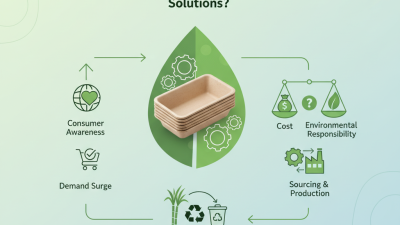
The demand for eco-friendly packaging solutions has surged. More businesses are recognizing the importance of sustainability in clamshell containers. According to a recent study by the Sustainable Packaging Coalition, 66% of consumers prefer brands that offer environmentally friendly packaging. This statistic underscores the growing consumer awareness about sustainability.
Eco-friendly clamshell containers, made from materials like recycled PET and biodegradable options, serve as a wise choice. They typically consume less energy during production than traditional packaging. Moreover, these containers can reduce waste in landfills. The Research and Markets report highlighted that the global sustainable packaging market is expected to reach $500 billion by 2027. This growth reflects an increasing preference for products that minimize their environmental footprint.
However, challenges remain. Not all consumers are educated about the benefits of eco-friendly packaging. Transitioning to these solutions can also lead to higher production costs. Businesses must balance sustainability with affordability. Engaging in this discussion is crucial for those looking to improve their packaging strategies. Consumers and brands alike need to push for innovative solutions to ensure that sustainability becomes the norm, not the exception.