Best Disposable Food Containers for Safe and Convenient Storage?
In the fast-paced world of dining and food preparation, the role of Disposable Food Containers cannot be overstated. Renowned expert in food safety, Dr. Emily Johnson, emphasizes, "The right containers can make a significant difference in preventing contamination." This statement highlights the critical need for quality in the selection of these products.
Imagine a busy kitchen, where meal prep must be quick and efficient. Disposable Food Containers offer a practical solution for storage. They come in various sizes, making them adaptable for different portions, from single servings to family meals. However, not all containers are created equal. Some may leach harmful chemicals, especially when exposed to heat. It’s vital to choose BPA-free options for safety.
Many users overlook the importance of proper sealing, which can lead to spills and wasted food. A container that doesn't hold up can defeat its purpose. The market has many choices, yet, we must be cautious. While convenience is key, we must reflect on the materials used and their long-term effects on health and the environment. Ultimately, making informed decisions about Disposable Food Containers can significantly enhance our food storage practices.
Types of Disposable Food Containers: A Comprehensive Overview
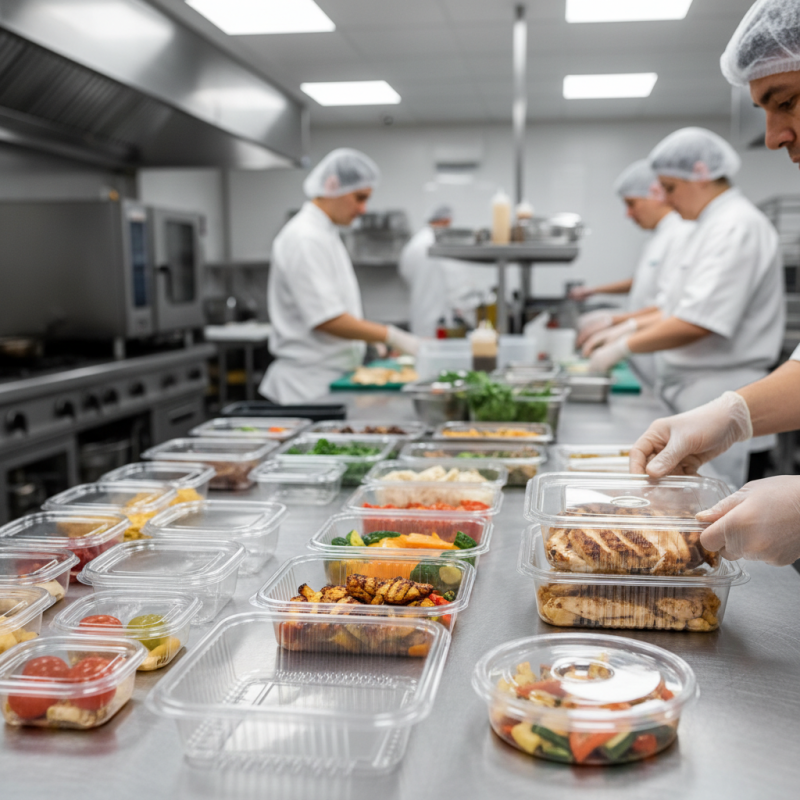
When it comes to convenient storage, disposable food containers are a popular choice. They come in various types to suit different needs. You can find options like plastic, foam, paper, and aluminum containers. Each has unique features, strengths, and weaknesses.
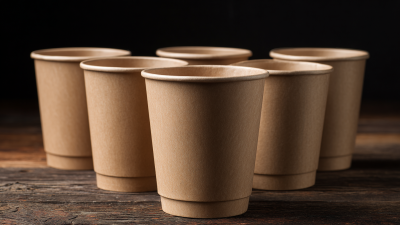
Plastic containers are lightweight and versatile. They can be used for both hot and cold foods. However, some users may worry about durability and environmental impact. Foam containers are great for insulation but often lack recyclability. Paper containers are biodegradable, making them eco-friendly. Yet, they may not hold up well with liquid foods.
Tips: Consider your needs before choosing a container. For wet items, opt for leaks-resistant options. It's also wise to check if the containers can be microwaved. You want your food to be safe. Remember, some containers hold heat, making them hard to handle. Safety is key. You might buy a container that doesn't fit well in your fridge. Think carefully about storage space.
Materials Used in Disposable Food Containers: Safety and Sustainability
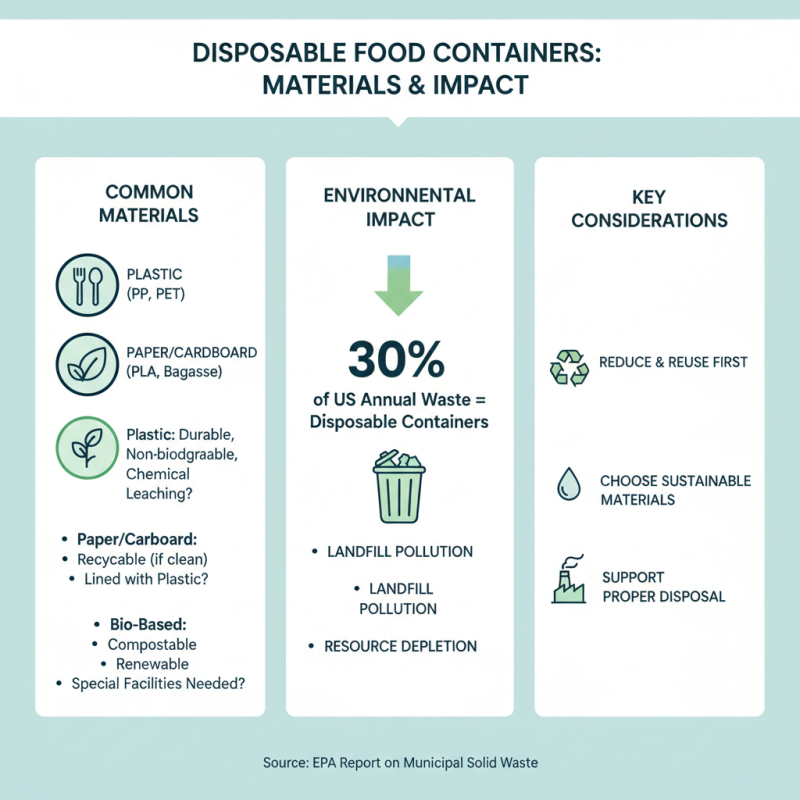
Disposable food containers come in various materials, each with distinct safety and sustainability profiles. Common materials include plastic, paper, and bio-based alternatives. According to a recent report by the Environmental Protection Agency, about 30% of annual municipal solid waste comes from disposable containers. This alarming statistic calls for a closer look at the impact of these materials.
Plastic containers are popular due to their lightweight nature and versatility. However, concerns have arisen about chemicals leaching into food. The World Health Organization has warned against certain plastics, stressing that some can pose health risks. In contrast, paper-based containers are biodegradable but often treated with chemicals that can hinder their environmental benefits. A study showed that less than 25% of paper containers are composted, raising questions about their true sustainability.
Biodegradable alternatives are gaining traction, but they are not without flaws. Many bio-based containers still require specific waste conditions to decompose effectively. A study published in the Journal of Cleaner Production found that confusion over disposal methods can lead to increased landfill waste. Consumers are often unaware of proper disposal guidelines. Education is key. It's essential to consider not just safety, but the complete lifecycle of these containers.
Factors to Consider When Choosing Disposable Food Containers
When selecting disposable food containers, consider the material. Plastic is lightweight and versatile. However, some plastics can leach harmful chemicals into food. Choose BPA-free containers to ensure safety. Cardboard and paper options are eco-friendly but less durable. They may not hold liquids well. Think about the type of food you will store.
Size is another crucial factor. Smaller containers work for snacks. Larger ones suit meals. Overfilling can lead to messes. Check the container’s seal. A tight seal keeps food fresh. Loose lids may allow air to enter, spoiling your food. Make sure the containers stack well for easy storage.
Price matters too. Disposable containers vary widely. Higher-priced ones often offer better quality. Consider your budget. Sometimes, spending a little more means fewer leaks. Too many cheap options can result in frustration. It’s essential to find the right balance between cost and function. Reflect on your needs and choose wisely.
Best Disposable Food Containers for Safe and Convenient Storage
Top Brands for Disposable Food Containers: Quality and Reputation
When choosing disposable food containers, quality matters. Many brands offer a range of materials and designs. Look for containers made from sturdy plastics or biodegradable options. These choices not only ensure safety for your food but also show a commitment to the environment.
Reputation is key when it comes to selecting a brand. Consumers often rely on reviews and ratings from others. Some containers may leak or not hold up in the freezer. It’s important to research and choose wisely. A container that works well today might not perform tomorrow. Some users find that leaks happen unexpectedly, leading to messy spills. Checking for BPA-free labels ensures safer storage, but it’s not always easy to find.
Brand loyalty can be helpful but isn’t essential. Sometimes, lesser-known brands offer surprising quality. Experiment and discover what fits your needs best. The best container is one that meets safety standards and creates a hassle-free experience in your kitchen. Remember, it’s okay to reassess your choices over time.
Best Disposable Food Containers for Safe and Convenient Storage
| Material |
Size (oz) |
Leak Resistance |
Microwave Safe |
Price Range ($) |
| Plastic |
16 |
Yes |
Yes |
10-15 |
| Biodegradable |
32 |
No |
Yes |
15-20 |
| Foil |
8 |
Yes |
No |
5-10 |
| Glass |
24 |
Yes |
Yes |
20-30 |
| Bamboo |
12 |
No |
Yes |
10-18 |
Tips for Proper Storage and Usage of Disposable Food Containers
When using disposable food containers, proper storage is essential. Always ensure the containers are clean before use. Inspect them for any damage. Cracks or dents can lead to leaks, making storage unsafe. It’s important to choose the right size. Overfilling containers may cause spillage, which can be a hassle.
Label your containers for easy identification. This simple step helps track leftovers and prevents food waste. If you're storing different types of food, use separate containers. This avoids cross-contamination, keeping flavors intact.
Consider reheating options as well. Not all disposable containers are microwave-safe. Always check for symbols indicating if they can withstand heat. Some materials can warp, altering the food's taste and texture. Rethink your storage habits to maintain food quality. With thoughtful care, you can enjoy the convenience of disposable containers while minimizing waste.