How to Choose the Best Disposable Containers for Your Needs?
Choosing the right disposable containers is vital for various industries today. According to a report by IBISWorld, the disposable container market is projected to grow by 4.5% annually, highlighting the increasing demand. In this context, industry expert Laura Thompson emphasizes, "Selecting the proper disposable containers is not only about cost; it’s about sustainability and functionality."
Many businesses overlook the materials used in disposable containers. They often choose based solely on price, ignoring the impact on the environment. For example, biodegradable options are available but are sometimes more expensive. An informed choice considers both environmental impact and the intended use.
Understanding consumer needs is another critical factor. Whether for food service, medical, or retail, each application has different requirements. For example, food businesses require containers that maintain temperature and safety. This complexity means there's no one-size-fits-all solution. Reflecting on these aspects ensures that the chosen disposable containers truly meet business and environmental goals.
Understanding Different Types of Disposable Containers Available in the Market
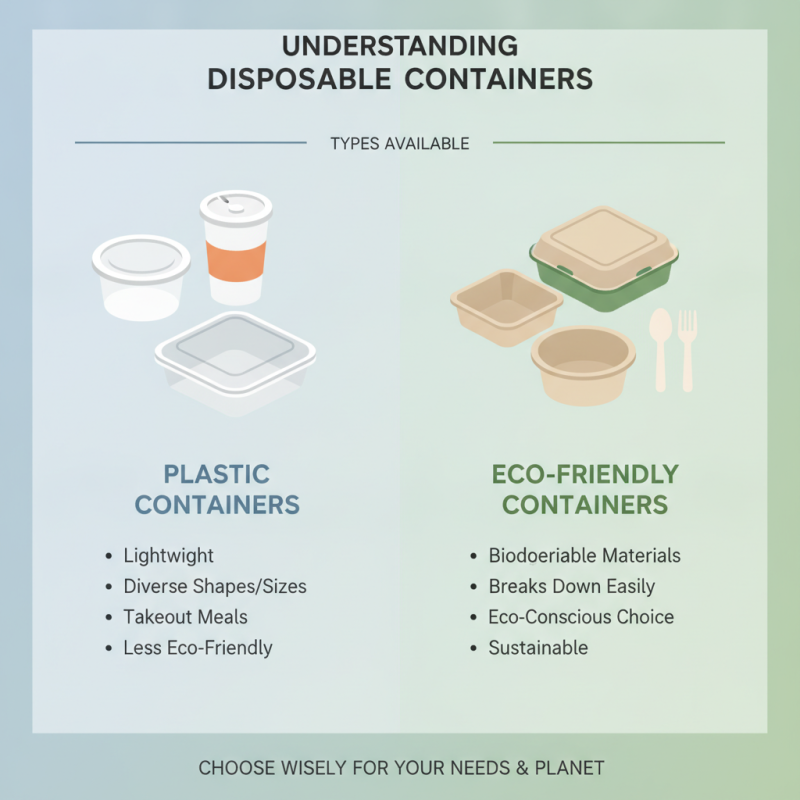
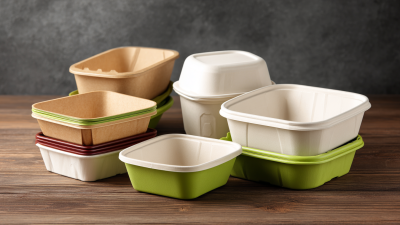
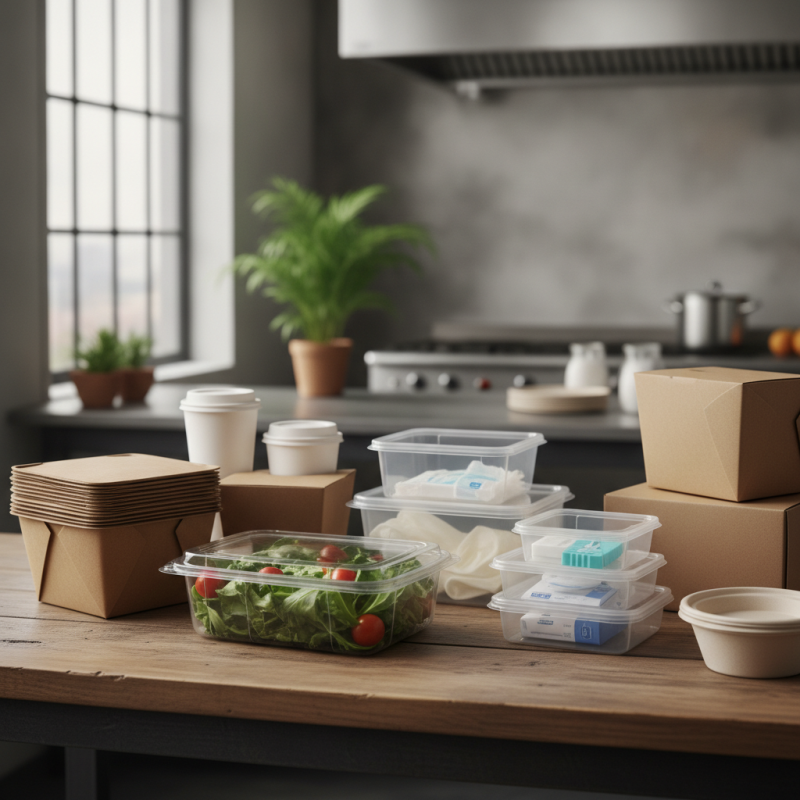
When selecting disposable containers, understanding the variety available is crucial. There are several types, each suited for different purposes. For example, plastic containers are lightweight and come in various shapes and sizes. They are great for takeout meals. However, they can be less eco-friendly. Eco-friendly options exist, like biodegradable containers, which are made from materials that break down more easily. These may be ideal for environmentally conscious consumers.
Foam containers are another popular choice. They provide excellent insulation, keeping food hot or cold. Yet, they may not always be recyclable. Paper containers, on the other hand, can be compostable. Many are designed for soups or salads, offering a more natural look. It's important to consider the intended use and the material's properties.
Cost is also a factor. Cheaper containers may not hold up well, leading to leaks or breakage. Higher-quality options may be necessary for events or catering. Reflecting on your needs will help narrow down the choices. Evaluate the container's durability, purpose, and environmental impact before making a decision.
Factors to Consider When Choosing Disposable Containers for Specific Needs
When selecting disposable containers, it’s crucial to weigh multiple factors. Material type is a primary consideration. For instance, plastic containers are lightweight and versatile. However, they may not withstand high temperatures as well as aluminum or glass options. A report from the Food Packaging Institute indicates that 70% of consumers prefer packaging that can withstand multiple uses. This trend raises questions about durability and sustainability.
Food safety is another critical factor. Always check if containers are BPA-free and approved for food contact. Research shows that improper materials can lead to chemical leaching, affecting food quality. Furthermore, labeling is essential. Many consumers remain unaware of proper disposal methods. Confusion stems from mixed recycling rules across regions, making it vital to provide clear guidance on disposal.
Capacity and design also matter. Choose sizes that match your portion needs to minimize food waste. The EPA highlights that approximately 30-40% of the food supply is wasted at the consumer level. Thoughtful design, like stackability or easy sealing, can enhance user experience but may sometimes compromise on sustainability. Balancing these elements requires careful consideration to meet specific needs while staying aligned with environmental responsibilities.
How to Choose the Best Disposable Containers for Your Needs?
When selecting disposable containers, it's essential to consider various factors such as material type, size, shape, and intended use. The following chart illustrates the preferences for different types of disposable containers based on usage scenarios.
Evaluating Material Options: Plastic, Paper, and Biodegradable Choices
When choosing disposable containers, the material is crucial.
Plastic, paper, and biodegradable options all have distinct advantages and drawbacks. A study by
Smithers Pira indicates that the global demand for
sustainable packaging will reach $400 billion by 2025.
This reflects a growing preference for eco-friendly materials.
Plastic containers are lightweight and durable.
They are widely used in the food industry due to their ability to preserve freshness. However, they contribute significantly to
environmental pollution. An estimated 8 million tons of plastic enter oceans yearly.
This raises awareness about their long-term impact.
On the other hand, paper containers are biodegradable and recyclable.
They offer a more sustainable alternative, but can lack durability. For instance, they may not hold liquid as effectively as plastic.
Biodegradable options made from plant-based materials are also emerging.
These options decompose faster but can have varying performance in different environments.
With ongoing research, finding the right container remains complex.
Balancing durability and environmental impact requires thoughtful decisions.
Assessing Size and Capacity for Effective Portion Control
When selecting disposable containers, understanding size and capacity is crucial. The right dimensions can significantly improve portion control. Too large a container may lead to over-serving, while too small can lead to waste. Aim for balanced sizes that cater to your specific needs.
Consider the food type you are storing. Soft foods may require deeper containers, while snacks could fit better in flat, shallow ones. It's essential to evaluate what you're packing. For instance, salads need space to avoid wilting. A common pitfall is using a one-size-fits-all approach, which often results in excess waste or inadequate portions.
Testing different sizes can help refine your choice. You might find that a medium container works well for most meals but fails for heavier dishes. Keep track of what fits best. This trial and error process may lead to more sustainable practices. Ultimately, the goal is to minimize waste and enhance customer satisfaction through effective portion control. Adjustments may be necessary as needs evolve over time.
How to Choose the Best Disposable Containers for Your Needs? - Assessing Size and Capacity for Effective Portion Control
| Container Type |
Capacity (oz) |
Dimensions (inches) |
Best Use |
Ideal for Portion Control |
| Round Container |
12 |
5.5 x 2.5 |
Soups, Salads |
Yes |
| Rectangular Container |
28 |
8 x 5 x 3 |
Meal Prep |
Yes |
| Compartment Container |
24 |
7 x 4.5 x 2.5 |
Bento Box |
Yes |
| Square Container |
16 |
6 x 6 x 3 |
Snacks, Desserts |
Yes |
| Round Salad Bowl |
32 |
10 x 3 |
Salads, Pasta |
Yes |
Budgeting for Quality: Cost-Effective Solutions in Disposable Containers
When selecting disposable containers, cost-effectiveness is vital. Many options exist that balance affordability and quality. A lower price can be tempting, but it often reflects a lack of durability. Sometimes, you end up spending more when a cheaper container leaks or breaks. It’s crucial to evaluate the long-term value rather than just the upfront cost.
Consider eco-friendly options. They may initially appear pricier, but these containers often offer better performance. Investing in better materials can reduce waste and improve user satisfaction. If you host frequent events or operate a food service, the right choice can save money over time. However, not every eco-solution fits all needs. Some may lack the sturdiness required for certain tasks.
Take time to research different materials. From sugarcane to biodegradable plastics, choice matters. The right container should meet both your budget and your specific use case. You may find that versatility is as important as the price tag. Sometimes, a little trial and error is needed to find what works best. Keep this in mind; it’s all part of the learning process.