Why Choose Plastic Food Containers for Your Business?
Choosing the right container affects freshness, workflow, branding, and customer trust. For many food businesses, Plastic Food Containers offer a practical balance between durability, weight, visibility, and cost. A clear container can display bright salad layers, while a tight lid helps protect sauces during delivery. These details matter during busy lunch hours.
Packaging scholar Dr. Susan E. M. Selke has emphasized that “packaging is part of the product experience, not merely a wrapper.” Her perspective explains why containers deserve careful planning. Businesses should assess food compatibility, temperature resistance, stackability, lid security, and storage space before purchasing. A restaurant serving hot noodles needs different performance from a bakery selling chilled desserts. The cheapest option may become expensive when lids crack, food leaks, or staff lose time.
Plastic Food Containers can also support consistent portioning and cleaner preparation areas. Their lightweight design may reduce handling effort and transportation weight. Some models are reusable, recyclable, or made with recycled content, depending on local facilities and supplier claims. However, sustainability is not automatic. It requires honest material information, proper cleaning practices, and realistic end-of-life planning.
The decision is not perfect.
A container that performs well in delivery may look less premium on a retail shelf. A recyclable design may still be rejected where collection systems are limited. Businesses should test containers with real meals, real temperatures, and real handling conditions. Small trials reveal problems that product descriptions often hide. When performance, safety, presentation, and operational cost align, Plastic Food Containers become more than storage. They become a dependable part of the customer experience.
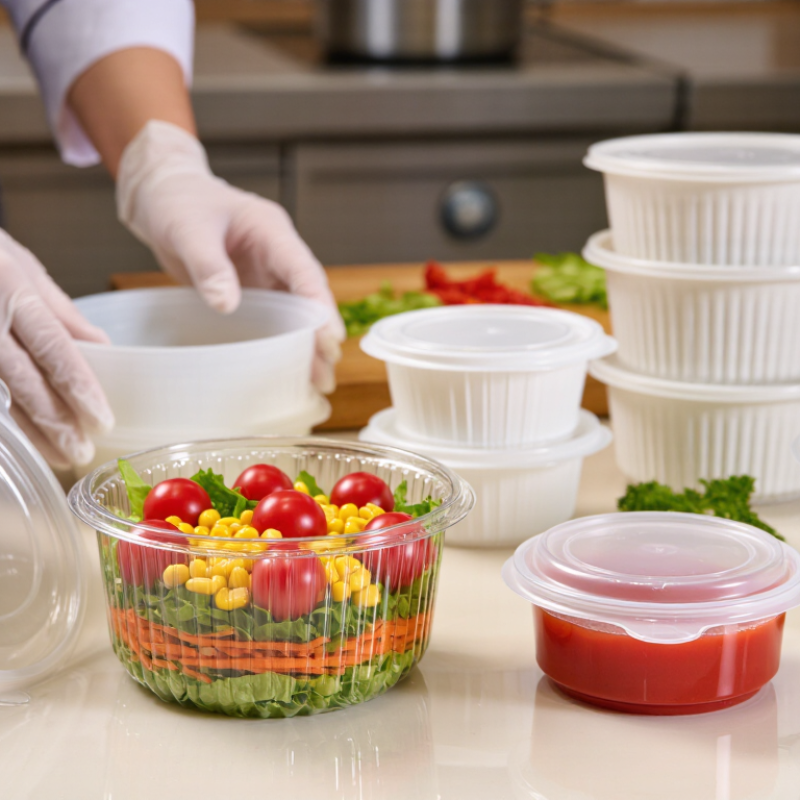
Plastic food containers are rigid or flexible vessels made from food-contact polymers such as polypropylene, polyethylene, or PET. Businesses use them for salads, sauces, meal preparation, takeaway meals, and chilled ingredients. Their light weight reduces transport effort, while clear walls help workers check portions, freshness, and contamination risks quickly.
The OECD’s Global Plastics Outlook reports that packaging generated about 40% of global plastic waste in 2019. UNEP’s 2023 Turning off the Tap report also identifies packaging as the largest single-use plastics sector. These figures explain the popularity of plastic containers, but they also demand careful purchasing. A container suitable for a cold salad may deform beside hot soup. A thin lid may leak during delivery. Food-contact suitability depends on the resin, temperature, food acidity, storage time, and intended use. Practical testing matters more than attractive specifications. That assumption is easy to miss.
Tips: Match the container to the food and temperature range. Check supplier test documents, closure strength, and stacking performance. Test one filled container overnight before ordering in bulk. Avoid using a container repeatedly when its surface becomes cloudy, cracked, or deeply scratched. Keep records of batch details and cleaning procedures. The perfect container rarely exists; the best choice often involves a compromise between cost, durability, clarity, and waste reduction.
Common food-contact plastics are selected according to temperature, durability, transparency, and the type of food being stored or served.
The chart shows representative upper temperature limits commonly associated with food-contact grades. Polypropylene is frequently used for microwaveable meal containers, while HDPE and LDPE are common for refrigerated storage and flexible packaging. PET is widely used for clear cold-food and beverage containers. Actual limits vary by resin grade, wall thickness, processing method, and manufacturer specifications.
Plastic food containers can make daily business operations faster and more controlled. Their practical value depends on design, not plastic alone.
A sturdy container protects meals during storage, delivery, and display. Transparent walls also help staff identify contents without opening every lid.
A secure lid is essential. It should close firmly but remain easy to remove during busy service. Leak-resistant edges reduce spills in delivery bags and refrigerators.
Stackable shapes save shelf space, especially in compact kitchens. Consistent sizes can simplify portion control and purchasing.
Containers should also tolerate the temperatures your business actually uses. Some products handle refrigeration well but deform near heat. Check food-contact documentation and cleaning instructions before regular use.
I have found that unclear labels create avoidable mistakes. A perfectly universal container does not exist.
Tips: Choose sizes around your busiest menu items. Test lids with liquid before ordering large quantities. Select clear containers for faster stock checks. Avoid overly thin walls when workers handle containers repeatedly. Reusable options may reduce replacement costs, but only when cleaning time and equipment are realistic. Record cracks, stains, and warped lids during routine checks. These details reveal whether a container is truly practical.
Plastic food containers can improve food safety when businesses use them correctly. In a busy kitchen, their smooth, nonporous surfaces are easier to wash and sanitize than rough materials. Tight-fitting lids help protect prepared food from dust, drips, and accidental contact. Clear sides also make contents visible, reducing unnecessary opening and handling.
Storage becomes more controlled with stackable containers. Staff can separate raw ingredients from ready-to-eat foods and label each container with the product name, preparation time, and use-by date. Consistent shapes save shelf space and improve airflow inside refrigerators. I have found that smaller containers cool food more evenly than deep ones, especially after large-batch cooking. Food should still be divided promptly and chilled according to local food safety guidance.
Plastic is not flawless. Scratches, stains, and warped lids can create cleaning problems. Replace damaged containers. Some plastics can also soften or crack when exposed to high heat, so workers should follow the container’s temperature instructions. A container labeled food-grade is important, but it does not replace proper cleaning or safe handling. Staff training matters just as much. Even a clean container can become unsafe when used for raw chicken, then reused for salad without thorough sanitation. Regular inspections help, although busy teams may occasionally miss one. That weakness deserves attention.
Why Choose Plastic Food Containers for Your Business?
In a busy commercial kitchen, container costs include more than the purchase price. Food-grade plastic containers are usually lighter than glass or metal alternatives. This lowers handling effort and may reduce shelving and transport costs. They also resist shattering when dropped near preparation areas. Less breakage. That matters during rushed service.
Clear containers can help staff identify ingredients without opening every lid. Standard shapes stack neatly, improving cooler space and reducing wasted storage volume. Tight-fitting lids can protect prepared food from spills and cross-contact when used correctly. Consistent container sizes may also simplify portion control. Over time, these small improvements can reduce labor minutes during receiving, prep, and cleanup.
The financial benefit depends on the operation. Thin containers may cost less initially, but they can warp, stain, or crack sooner. I have seen teams replace cheap stock repeatedly after heavy dishwasher use. That is not a saving. Durable, temperature-rated products often deliver better value, although the right choice should match actual heating, cooling, and washing conditions. Plastic also needs responsible handling at the end of its service life. Recycling options vary by location and material, so local guidance should be checked before making claims. A written replacement schedule, basic staff training, and regular inspections can prevent damaged containers from returning to food preparation. Still, no system is perfect; lids disappear, sizes get mixed, and expected savings can weaken without daily control.
| Business Dimension | Typical Plastic Container Profile | Operational or Cost Benchmark | Business Benefit | Key Consideration |
|---|---|---|---|---|
| Purchase cost | Reusable polypropylene containers in common food-service sizes | Approximately $0.80–$6.00 per unit | Lower initial cost than many reusable alternatives, especially at volume | Price depends on capacity, wall thickness, lid design, and order quantity |
| Expected service life | Commercial-grade reusable containers used with appropriate handling | Often 1–3 years in regular food-service use | Spreads replacement cost over repeated cycles | Heat, scratching, chemicals, stacking pressure, and rough handling can shorten service life |
| Weight and handling | Lightweight molded plastic construction | Commonly 30%–60% lighter than comparable glass containers | Reduces lifting effort and can lower handling fatigue | Actual weight difference depends on container dimensions and wall thickness |
| Breakage and replacement | Impact-resistant plastic compared with brittle materials | Low risk of shattering during normal handling | Fewer sudden replacements and less risk from broken-container cleanup | Plastic can crack, warp, or become heavily scratched rather than shatter |
| Washing and turnaround | Stackable containers designed for commercial dishwashing | Supports repeat use after each wash-and-sanitize cycle | Improves container availability and reduces dependence on single-use packaging | Use only products rated for the operating temperature and cleaning chemicals |
| Storage efficiency | Nesting bodies and stackable lids or containers | Can reduce occupied storage volume by approximately 20%–50% versus non-nesting formats | More usable storage capacity and faster stock retrieval | Space savings depend on the nesting ratio and whether lids are stored separately |
| Transport efficiency | Lightweight containers with fitted lids and uniform footprints | More units can be handled per tote, cart, or delivery load | Can reduce handling time and improve order organization | Do not overfill; container stacking must remain stable during transport |
| Food-contact suitability | Food-contact-grade polypropylene or other approved plastic | Suitable for many chilled, ambient, and reheating applications when specified | One container system can support preparation, storage, and service workflows | Verify local food-contact compliance, temperature limits, and microwave or oven restrictions |
| Temperature performance | Reusable containers selected for the intended hot or cold process | Many polypropylene products operate across roughly −20°C to 100°C; specifications vary | Supports refrigeration, freezing, and selected reheating tasks | Temperature ratings must be confirmed for the exact product and use cycle |
| Labor productivity | Uniform sizes, lids, and labeling areas | Can reduce sorting and identification steps in repetitive workflows | Improves consistency in portioning, storage, picking, and dispatch | Benefits are strongest when container sizes and locations are standardized |
| Waste reduction | Reusable system replacing disposable food containers | Each container can replace multiple single-use packages over its service life | Reduces recurring packaging purchases and packaging waste | Reuse benefits depend on achieving enough cycles and maintaining an effective return-and-wash process |
| End-of-life recovery | Single-polymer products are generally easier to sort than mixed-material formats | Recycling availability varies by local collection infrastructure | May support material recovery at the end of useful life | Food residue, additives, colorants, and local recycling rules affect acceptance |
Businesses should choose plastic food containers by matching them to daily work, not appearance alone. Food-grade material is essential, but it is only the starting point. Check the container’s temperature range, wall strength, lid fit, and resistance to oils or acidic foods. A container for hot soup needs different performance from one used for chilled salad. Ask suppliers for material specifications and care instructions. Test a small batch before placing a large order.
Measure the storage area carefully. A lid that bends inside a crowded refrigerator wastes space and causes leaks. Stackable shapes usually improve shelf use, while clear walls help staff identify contents quickly. Choose practical sizes for common portions. Oversized containers often leave food exposed to air. Label each container with the preparation date, contents, and responsible team member. Keep labels readable after washing.
Management matters as much as selection. Train workers to inspect cracks, cloudy surfaces, loose lids, and deep scratches during cleaning. Replace damaged pieces promptly. Do not rely on appearance alone; small scratches can hold residue and become difficult to clean. Follow the container’s cleaning limits, especially when using high heat or commercial dishwashers. Store lids separately if trapped moisture becomes a recurring problem.
I have found that rushed inspections create avoidable waste. Still, some teams inspect too often and disrupt service. A simple weekly review, adjusted after real use, may work better.