Leave Your Message

7 Best Sugarcane Bagasse Packaging Suppliers in 2026

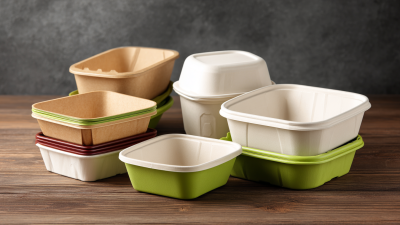
Sugarcane Bagasse Packaging is made from the fibrous residue left after sugarcane is pressed. That starting point sounds simple. Choosing a supplier is not. Buyers must compare product strength, food-contact suitability, production capacity, customization, and delivery reliability. A molded-fiber bowl may look sturdy on a screen, yet behave differently under hot food or during a long delivery route.

Ellen MacArthur’s circular-economy work offers a useful lens. The Ellen MacArthur Foundation describes that vision as “restorative and regenerative by design.” For packaging buyers, the principle invites practical questions: What happens to the product after use? Which material claims can the supplier document? And does the packaging fit the local waste system? Bagasse is not a magic fix. Coatings, mixed materials, and disposal conditions can change its real-world impact. Details matter.

This guide reviews seven suppliers for 2026, with attention to product range, customization, certifications, and customer support. It is designed to help purchasing teams build a shortlist, not replace sample testing or direct supplier checks. Ask for current specifications. Test lids, seams, and stacks with the foods you actually serve. Then check whether quoted lead times hold up during peak demand. A polished catalog is useful. Evidence is better. Some comparisons remain imperfect, because supplier disclosures and product lines can change. Treat rankings as a starting point, and verify the details before committing.
7 Best Sugarcane Bagasse Packaging Suppliers in 2026

Bagasse Packaging Basics: About 270 kg of Fibre per Tonne of Sugarcane

A tonne of freshly crushed sugarcane does not yield 270 kg of dry fibre. FAO’s Agricultural Services Bulletin 128 reports that bagasse commonly represents about 25–30% of cane weight, with roughly 45–50% moisture. That puts wet bagasse output near 250–300 kg per tonne. The distinction matters. At those moisture levels, 270 kg of bagasse contains roughly 135–149 kg of dry matter, before processing losses. So the subtitle’s figure is useful, but it needs qualification: it describes moist bagasse, not finished packaging fibre.

Bagasse is a mix of plant components, not a uniform pulp. A review in Bioresource Technology by Pandey and colleagues reports typical ranges of 40–50% cellulose, 25–35% hemicellulose, and 20–25% lignin. Cane variety, mill extraction, and moisture all affect the actual yield. A small detail, with real consequences: two batches can look similar yet behave differently in moulding. Packaging buyers should ask whether a supplier’s yield refers to wet bagasse, dry pulp, or finished products. That question is easy to overlook. It also makes supplier comparisons more reliable.

Sources: FAO, Agricultural Services Bulletin 128, Sugarcane as Feed; Pandey et al., Bioresource Technology, 2000.
Supplier Vetting: Food-Contact Compliance, Certifications, and Production Capacity

Sugarcane bagasse packaging can appear uniform, yet its food-contact performance depends on pulp, coatings, and manufacturing controls. Ask each supplier for migration-test reports covering the exact product and intended food. Test conditions should match real use, including hot, oily, or acidic foods and contact time. Request reports from an ISO/IEC 17025-accredited laboratory, plus batch traceability and change-control records. FAOSTAT recorded roughly 1.9 billion tonnes of sugarcane production worldwide in 2022. That figure signals a large crop, not a guaranteed supply of usable bagasse; regional access and seasonal processing still matter.

Tips: Check certificate scope and expiry dates. ISO 22000 or BRCGS Packaging Materials certification can support supplier assessment, but neither replaces product-specific food-contact evidence. Ask for a recent production sample and its matching test report.

Capacity deserves the same scrutiny as compliance. Request monthly output, current lead times, mold availability, defect rates, and peak-season allocation in writing. Then compare those figures with a trial order and production records, rather than relying on a sales estimate. A sample may look excellent; it cannot prove consistent output across thousands of units. Ask how the supplier handles pulp shortages, failed batches, and specification changes. Those answers can reveal weak controls, even when the paperwork looks polished.

Seven Best Sugarcane Bagasse Packaging Suppliers in 2026

Seven Best Sugarcane Bagasse Packaging Suppliers in 2026

Choosing among the seven best sugarcane bagasse packaging suppliers means checking production evidence, not just glossy samples. FAOSTAT records roughly 1.9 billion tonnes of sugar cane harvested worldwide in 2022, supporting a substantial agricultural residue supply. But local collection and processing still matter. Ask suppliers where pulp is sourced, how it is molded, and whether output stays consistent across orders. A warm, damp sample can behave differently from one stored in a dry warehouse. Test both.

Compare seven practical strengths: traceable feedstock, food-contact documentation, reliable production capacity, custom mold design, clear minimum orders, dependable lead times, and performance testing. Request samples and test them with the actual menu: hot soup, oily sides, or a chilled dessert. Check for leaks, softened corners, and lids that pop open during delivery. OECD’s Global Plastics Outlook reports that only 9% of plastic waste was recycled in 2019; that figure adds context, but it does not prove every fiber package is better in every disposal system. Details matter.

Ask for test conditions, not broad claims. Review moisture resistance and heat performance, then confirm whether local waste services accept the used packaging. Some buyers overlook storage space and freight cost. That is easy to regret. A supplier with clear records and repeatable samples may be a safer choice than one offering the lowest unit price. In 2026, the best fit is the supplier whose evidence matches your product and actual delivery route.

Compare Suppliers by MOQ, Lead Time, Product Range, and Total Cost

Comparing sugarcane bagasse packaging suppliers in 2026 takes more than checking unit prices. Start with the minimum order quantity, then ask whether it applies per size, design, or mixed shipment. A low MOQ may suit a café testing 500 clamshells, while larger buyers may need pallet-level pricing. Small orders matter. Request written specifications for dimensions, weight, and lid fit; product photos alone can miss useful details.

Lead time needs careful checking. Ask suppliers to separate sample preparation, production, and shipping estimates. A quoted 20-day production window may not include custom tooling or port delays. Confirm how changes to artwork or order quantities affect the schedule. If delivery dates are critical, request recent, anonymized records for comparable orders rather than relying only on a sales estimate.

Compare product range and total cost together. Check whether one supplier offers bowls, trays, plates, and matching lids in consistent sizes. Then add freight, tooling, protective packaging, payment fees, and possible storage costs to the unit price. Ask how damaged or off-spec items are handled. Some quotes remain incomplete, even after a follow-up; note each unanswered item before deciding. A simple spreadsheet can make differences visible, though estimates still need verification before purchase.

Compostability Benchmark: EN 13432 Requires 90% Biodegradation Within Six Months

Sugarcane bagasse looks compostable, but the fiber alone does not prove a finished package will break down. EN 13432 sets a measurable benchmark: at least 90% biodegradation within six months under controlled composting tests. It also limits visible disintegration residue after 12 weeks. These are test conditions, not a promise that packaging will disappear in a backyard compost pile.

The whole article must be assessed. A molded tray can contain coatings, adhesives, or inks that affect its compostability. That detail is easy to miss. Ask suppliers for certification and test reports covering the exact package construction, not just the bagasse pulp. Check the stated composting conditions, too; industrial facilities may use managed heat, moisture, and aeration.

European Bioplastics’ 2024 market update estimated global bioplastics production capacity at 2.47 million tonnes for 2024, with capacity projected to reach 5.73 million tonnes by 2029. This is market capacity data, not proof that any individual product meets EN 13432. Supplier comparisons should keep those claims separate. Real-world disposal remains less tidy than laboratory testing.

7 Best Sugarcane Bagasse Packaging Suppliers in 2026 - Compostability Benchmark: EN 13432 Requires 90% Biodegradation Within Six Months

Standards-based supplier evaluation table. It does not rank or verify individual suppliers; request current product-specific test reports and certificates before purchasing.

Evaluation dimension Relevant benchmark Evidence to request from supplier Buyer check
1. Biodegradation EN 13432 requires at least 90% biodegradation within a maximum of six months under the specified controlled composting test conditions. A test report identifying the exact packaging product, test method, conditions, and result. Confirm the tested item matches the product being purchased, including coatings, inks, and additives.
2. Disintegration For EN 13432, after 12 weeks of composting, no more than 10% of the original dry mass may remain on a 2 mm sieve. A disintegration test report for the finished packaging article. Check that the evidence covers the finished item, not only the bagasse pulp.
3. Compost quality and ecotoxicity The standard includes assessment of compost quality and whether the test material adversely affects plant growth. Ecotoxicity and compost-quality test results from the relevant certification or testing process. Review the report scope, test outcome, and any stated limitations.
4. Chemical constituents EN 13432 sets requirements for constituents, including limits for specified heavy metals. A product-specific chemical analysis or applicable certification documentation. Check that colorants, coatings, adhesives, and other components are included in the assessment.
5. Product and component coverage Compostability claims should be supported for the packaging as supplied; material changes can affect test applicability. A certificate or test report with product names or codes, construction details, and covered components. Match the documentation to the exact size, coating, lid, label, and other supplied parts.
6. Food-contact compliance Food-contact requirements depend on the intended market, food type, and conditions of use; compostability certification alone does not establish food-contact compliance. Applicable food-contact declarations and supporting migration or safety documentation for the destination market. Verify suitability for the intended hot, cold, oily, or acidic foods and contact duration.
7. Manufacturing consistency and traceability A certificate or test report applies only within its stated scope; consistent specifications and lot traceability help confirm ongoing conformity. Current product specifications, batch identification, change-control process, and recent quality records. Ask how changes to pulp, additives, coatings, or manufacturing sites are reviewed and communicated.

Note: EN 13432 concerns packaging recoverable through industrial composting and biodegradation under specified test conditions. It does not by itself guarantee that an item will compost in a home compost heap or be accepted by every local composting facility.