How to Choose Sugarcane Bagasse Packaging for Your Business
Choosing Sugarcane Bagasse Packaging is not just a materials decision. It affects product protection, serving experience, purchasing costs, and what happens after disposal. Bagasse is made from the fibrous residue left after sugarcane juice extraction. Its useful second life sounds compelling. Still, no material solves every packaging problem.
Sustainable-design expert William McDonough’s guiding phrase, “Waste equals food,” offers a useful lens for considering agricultural by-products. For a business, that idea needs practical testing. Will a container hold a hot, saucy meal without softening? Does its lid stay secure during delivery? Can staff stack it beside the prep station without slowing service? Small details matter. So does the unglamorous part: checking supplier specifications, sample performance, and the disposal options customers actually have.
This guide explains how to compare Sugarcane Bagasse Packaging by application, durability, customization, supplier reliability, and total cost. It also considers certifications and environmental claims, which should be verified rather than assumed. Bagasse packaging may suit some menus and operations beautifully; in others, moisture resistance, storage space, or local waste facilities may complicate the choice. That is worth admitting. A greener-looking container is not automatically a better fit. The aim is a defensible decision, based on real product trials and clear business needs—not a perfect-sounding promise.
Identify Your Business’s Packaging Needs
Start with the product, not the tray. Record its dimensions, weight, serving temperature, oil content, and how long it must stay inside the package. A dry pastry needs different protection from a hot, sauced meal. Test the actual product. Check for leaks, softening, lid fit, and whether the package stacks securely during delivery. Small details matter: a greasy base or loose lid can undo an otherwise good packaging choice.
Then map the package’s journey. Will staff use it at a counter, in a delivery bag, or on a refrigerated shelf? How many units fit in a carton, and can employees open and close them quickly? The OECD’s Global Plastics Outlook (2022) estimates that packaging accounted for 40% of global plastic waste in 2019. That makes material choices worth examining, but bagasse is not a universal fix. Check whether local waste facilities accept the finished item, especially if it has a coating. A common blind spot is assuming “compostable” means it will be composted locally. It may not. Ask suppliers for food-contact documentation and test samples under real operating conditions before committing to a large order. One round of testing may feel slow; replacing thousands of unsuitable containers is slower.
Compare Bagasse Packaging Types and Sizes
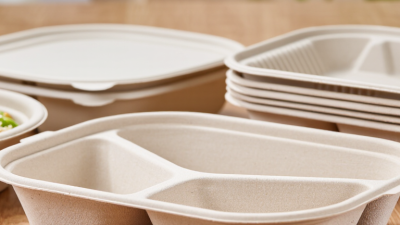
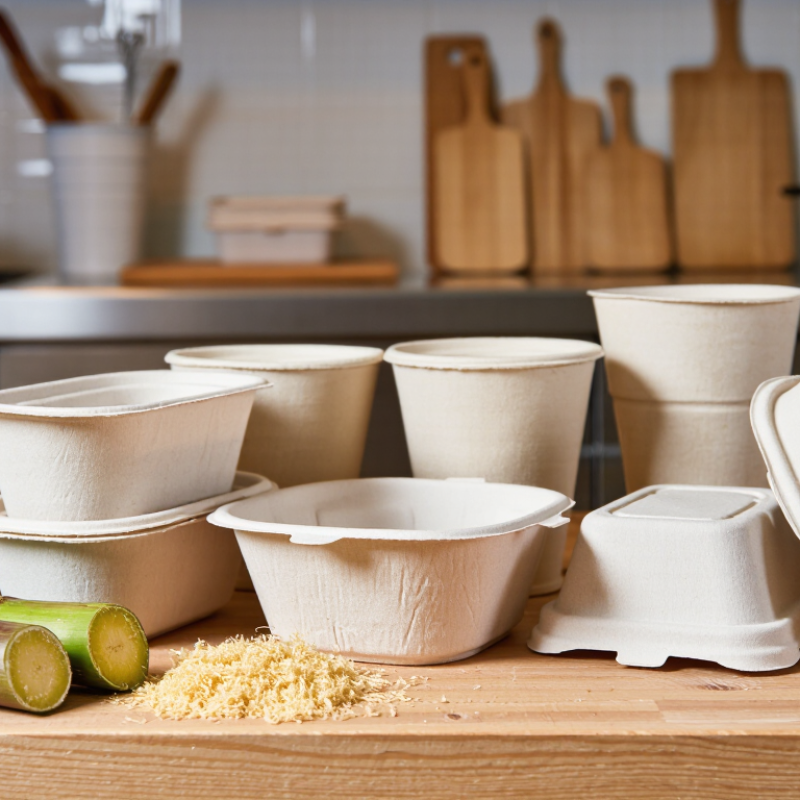
Compare bagasse packaging by shape, capacity, and how food travels. Clamshells suit burgers and takeaway meals; compartment trays keep sauces away from fries. Round bowls work for salads, rice, and soups, while plates fit dry servings. Bagasse products vary by supplier, so check actual dimensions and usable capacity rather than relying on “small” or “large.” A 900 ml bowl may look generous, but a wide, shallow shape can suit salads better than broth.
The OECD’s Global Plastics Outlook reports that packaging generated about 40% of plastic waste in 2019. That figure is not a direct measure of bagasse performance, but it shows why packaging choices deserve scrutiny. Match the container to the portion and delivery time: a snug clamshell can reduce movement, while an oversized tray may waste storage space. Check whether lids fit securely and test hot, oily food for at least the time it takes to reach a customer. Small details matter. I have seen “standard” sizes vary enough to disrupt shelf stacking.
Tips: Ask for samples in two nearby sizes. Fill them with your real menu items, then stack and transport them. Measure the food, not just the container. A quick test can reveal a poor fit.
Check Material Quality and Food Safety Compliance
Before ordering sugarcane bagasse packaging, ask for documentation that matches the exact product, not just the material category. Request food-contact test reports, a declaration of compliance, and details of the testing conditions. A certificate can look reassuring, but it may not cover your food, temperature, or storage time. Check the dates and product identifiers.
Test samples with the foods you actually serve. Fill a tray with hot soup, oily rice, or acidic dressing, then inspect it after the usual holding period. Look for leaks, soft spots, unusual odors, loose fibers, and lids that shift during delivery. Smell matters. Ask how production batches are tracked and how defects are handled. Do not assume every bagasse item performs alike; thickness, forming, and coatings can change its behavior. Keep supplier documents with your own sample notes, including the food tested and the time observed. One short trial is useful, but it cannot represent every busy shift or storage condition. That uncertainty deserves attention.
Evaluate Suppliers, Pricing, and Supply Capacity
How to Choose Sugarcane Bagasse Packaging for Your Business
A strong supplier conversation starts with your actual use case. Share the container dimensions, expected daily volume, filling temperature, and storage conditions. Ask for samples that match the proposed production material, not just a similar-looking item. Check lid fit, stacking stability, and whether the packaging softens after holding food. Small details matter. Request relevant material and food-contact documentation for your market, and confirm how quality checks are recorded.
Pricing needs a like-for-like comparison. Ask suppliers to separate unit price, tooling, freight, sample fees, and any minimum order quantity. A low unit price can become expensive if cartons take up too much storage space or arrive in oversized batches. Confirm payment terms and how prices may change with order volume or material costs. One easy mistake is trusting a sample too quickly. It does not prove that every production run will match.
Supply capacity should be specific, not a confident promise. Ask for normal lead times, peak-season limits, monthly output, and the process for handling delays. If your business has busy weeks, compare that forecast with the supplier’s available capacity and shipping schedule. Request updates when production begins and before goods leave the facility. Keep a backup plan, even if it feels unnecessary. A small trial order can reveal communication gaps before you depend on regular deliveries.
Test Packaging Performance Before Ordering in Bulk
Before ordering sugarcane bagasse packaging in bulk, test it with the food, equipment, and delivery conditions your business actually uses. UNEP’s 2023 report, Turning off the Tap, states that packaging accounts for 36% of plastic produced globally. That context supports exploring alternatives, but it does not prove a particular bagasse container will perform well. A dry tabletop check is not enough. Fill samples with hot, oily, or sauced foods, then check for leaks, softening, odor, and lid movement after realistic holding times. Include a cold item if condensation is common in your service.
Test stacking and handling, too. Load filled containers into the usual delivery bag, place them beneath typical orders, and inspect them after a representative trip. For repeatable checks, ASTM D642 covers compressive resistance of shipping containers, while ASTM D5276 covers free-fall drop testing. These tests can inform a trial, but they do not replace testing the complete food-and-package setup. Record results by sample, temperature, and elapsed time; compare several production samples, not just one. Small differences matter. A single successful trial may hide variation in wall thickness or fit. That is easy to overlook. Set acceptance limits before testing, and ask the supplier how production consistency is checked before committing to a large order.