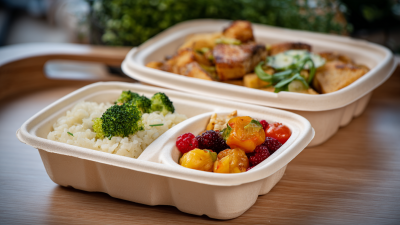
Top 10 Bagasse Clamshell Manufacturers for Global Buyers
Choosing the right Bagasse Clamshell supplier requires more than comparing prices. Global buyers must examine material quality, manufacturing consistency, food-contact documentation, and delivery performance. A container may look sturdy in a product photograph. It may still crack during stacking, soften under hot food, or arrive with uneven hinges. These details matter in busy restaurants, catering kitchens, and export warehouses.
Packaging sustainability expert John Mandyck has said, “Sustainable packaging must perform in the real world, not only in a brochure.” This principle guides our selection of the Top 10 Bagasse Clamshell Manufacturers for Global Buyers. Each manufacturer should be assessed through practical evidence. Useful signals include factory experience, production capacity, mold precision, moisture resistance, and quality-control records. Certifications also deserve careful checking. They should match the destination market and the intended food application.
The strongest suppliers usually provide clear specifications. Look for bagasse fiber content, temperature ranges, lid strength, carton dimensions, and sample policies. Ask how the company handles rejected batches. Ask whether production can remain stable during peak seasons. Small gaps can become costly problems. However, no ranking is perfect. Supplier performance can change with raw-material availability, freight conditions, and new regulations. Buyers should verify current documents before placing large orders. They should also test samples with actual meals, sauces, and delivery times.
This guide offers a practical starting point. It does not replace factory audits or independent testing. It helps buyers compare manufacturers with greater confidence. A reliable Bagasse Clamshell should protect food, support efficient operations, and fit the buyer’s local disposal infrastructure. That last point is often overlooked. It should not be.
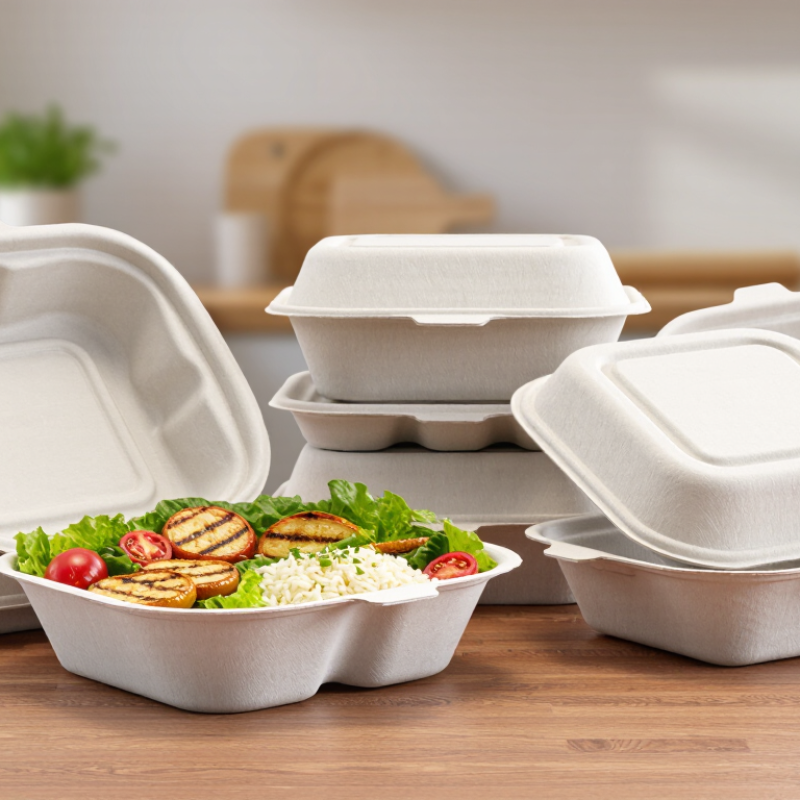
Industry Criteria for Evaluating Bagasse Clamshell Manufacturers
Top 10 Bagasse Clamshell Manufacturers for Global Buyers
Industry Criteria for Evaluating Bagasse Clamshell Manufacturers
A credible manufacturer starts with traceable bagasse pulp. Buyers should request supplier records, fiber origin, and batch-level quality data. The Grand View Research market report estimates strong growth in molded fiber packaging through 2030. That growth attracts capable factories and weak imitators. Verification matters.
Assess production capacity beyond attractive samples. Ask for monthly output, mold-change time, defect rates, and delivery performance. A clamshell may look clean but still fail under hot food, oil, or condensation. Independent testing should cover food-contact migration, compression strength, moisture resistance, and compostability claims. EN 13432 or ASTM D6400 testing can provide useful evidence, but certification scope must match the exact product. Packaging waste rules also vary by destination. Do not trust a certificate copied from another item.
Tips: Request three production samples from different batches. Measure closure fit, wall thickness, odor, leakage, and stacking strength. Review the factory’s audit history and corrective-action records. Check whether recycled water, energy consumption, and waste rates are measured. Smithers’ sustainable-packaging research highlights rising demand for fiber solutions, yet environmental claims still need lifecycle evidence. Carbon data without boundaries can mislead.
My practical ranking gives heavy weight to consistency, documentation, and responsive problem-solving. Price comes later. This is not perfect. Small suppliers can outperform larger plants on customization, while high-volume factories may hide slow communication. A site audit remains valuable. Photos are not proof.
Industry Criteria for Evaluating Bagasse Clamshell Manufacturers
This benchmark model assigns a total of 100 points to the criteria most relevant to global buyers. Food-contact compliance, compostability evidence, product consistency, and supply reliability receive the highest weighting because they directly affect regulatory acceptance, performance, and international procurement risk. The scores represent evaluation weights rather than rankings of individual companies.
Certifications, Sustainability Standards, and Quality Control
For global buyers comparing the top ten bagasse clamshell manufacturers, certification is only the entry point.
A credible supplier should provide current food-contact documents, factory audit records, and batch-level traceability. Depending on the destination market, relevant evidence may include ISO 9001, ISO 14001, recognized compostability certification, or compliance with EN 13432 and ASTM D6400. These references must match the actual product, not another material or factory. A certificate can expire. Check it.
Bagasse comes from sugarcane fiber, but “plant-based” does not automatically mean compostable everywhere. Buyers should ask whether the clamshell suits industrial composting, home composting, or neither. Testing should cover disintegration, biodegradation, heavy metals, and fluorinated chemicals where applicable. Sustainability claims also need evidence, including water reuse records, chemical controls, renewable energy data, and responsible fiber sourcing. Some factories report impressive percentages without explaining the calculation. That gap matters.
Quality control becomes visible on a loading dock. Inspectors should sample dimensions, hinge strength, leak resistance, hot-food performance, odor, and surface cleanliness. A reliable manufacturer retains sealed samples from each production lot and investigates nonconforming pieces. Ask for test dates, laboratory methods, and corrective-action reports. Factory visits help, although one visit cannot represent every shift. Humidity, mold prevention, and storage temperature also affect performance. Small defects become costly complaints. I would still request independent testing before a large order.
Pricing, Customization, Minimum Orders, and Global Shipping
Top 10 Bagasse Clamshell Manufacturers for Global Buyers
Pricing, Customization, Minimum Orders, and Global Shipping
Choosing among the top ten bagasse clamshell manufacturers requires more than comparing unit prices. Recent FAOSTAT data records more than 1.8 billion tonnes of global sugarcane production annually, creating a substantial bagasse feedstock. However, converting that residue into food containers requires pulping, molding, drying, and quality control. Indicative export pricing often ranges from US$0.08 to US$0.22 per standard clamshell, depending on size, wall thickness, coating, and order volume. Treat this as a starting estimate, not a quotation. The Smithers report, The Future of Sustainable Packaging to 2028, also identifies molded fiber as a growing packaging segment, but freight and energy costs can quickly change the final landed price.
Customization usually covers dimensions, ventilation holes, embossed logos, compartments, and paper-based packaging design. Custom molds may cost several hundred to several thousand dollars. Stock products can begin around 10,000 units, while customized projects often require 30,000 to 100,000 units. Ask for food-contact documentation, migration testing, moisture resistance results, and sample approval before production. Small details matter. A lid that closes poorly can create costly leakage complaints.
Global shipping needs careful planning. Bagasse containers are lightweight but bulky, so ocean freight is commonly calculated by volume rather than weight. Request FOB, CIF, or DDP quotations separately, and confirm carton dimensions before comparing suppliers.
The Ellen MacArthur Foundation reports that packaging represents a major share of plastic use, supporting the shift toward fiber alternatives. Still, bagasse is not automatically perfect; wet storage, weak stacking strength, and inconsistent fiber texture remain practical concerns.